
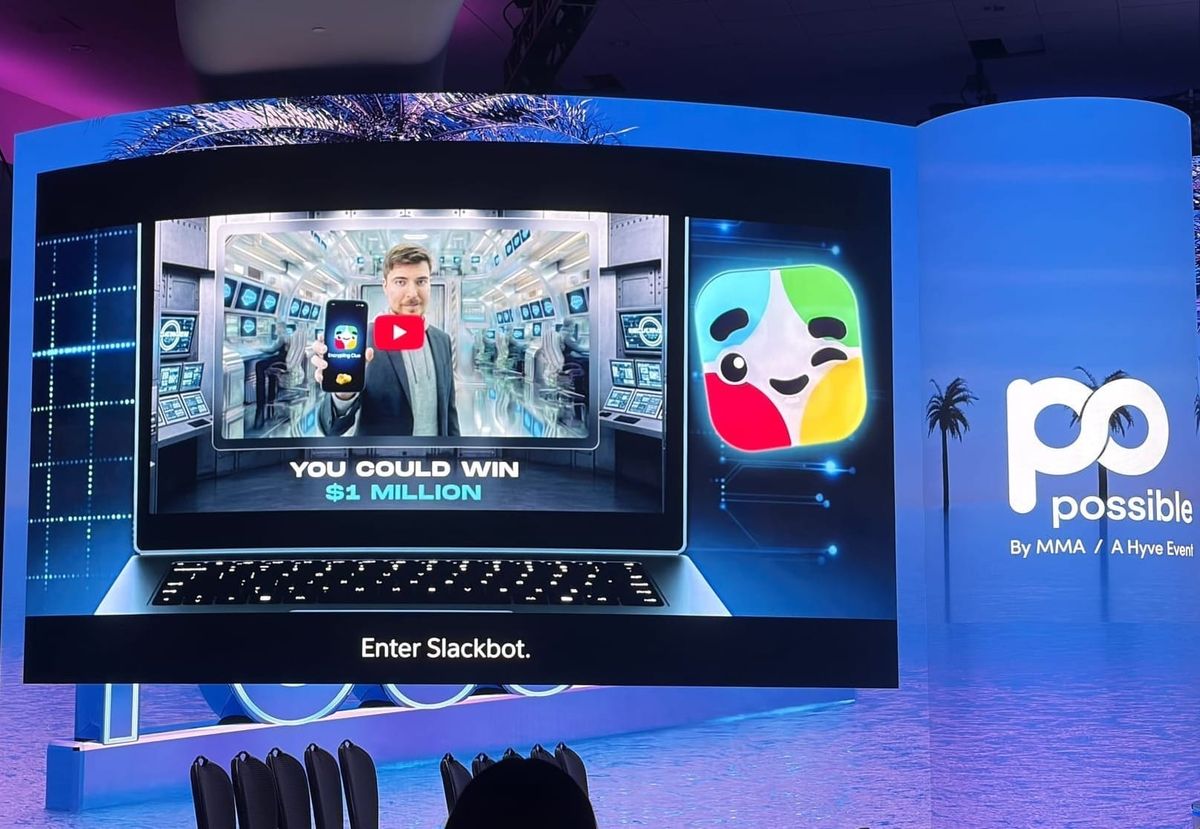
At POSSIBLE 2026, a session on the Salesforce x MrBeast campaign focused on a specific shift: using a Super Bowl ad to start an experience that unfolds over time, rather than concentrating everything into the spot itself.
John Zissimos leads creative at Salesforce, overseeing how the company translates its products into campaigns and customer narratives.
Beau Avril manages brand partnerships for MrBeast, working at the intersection of creator-led content and commercial collaborations.
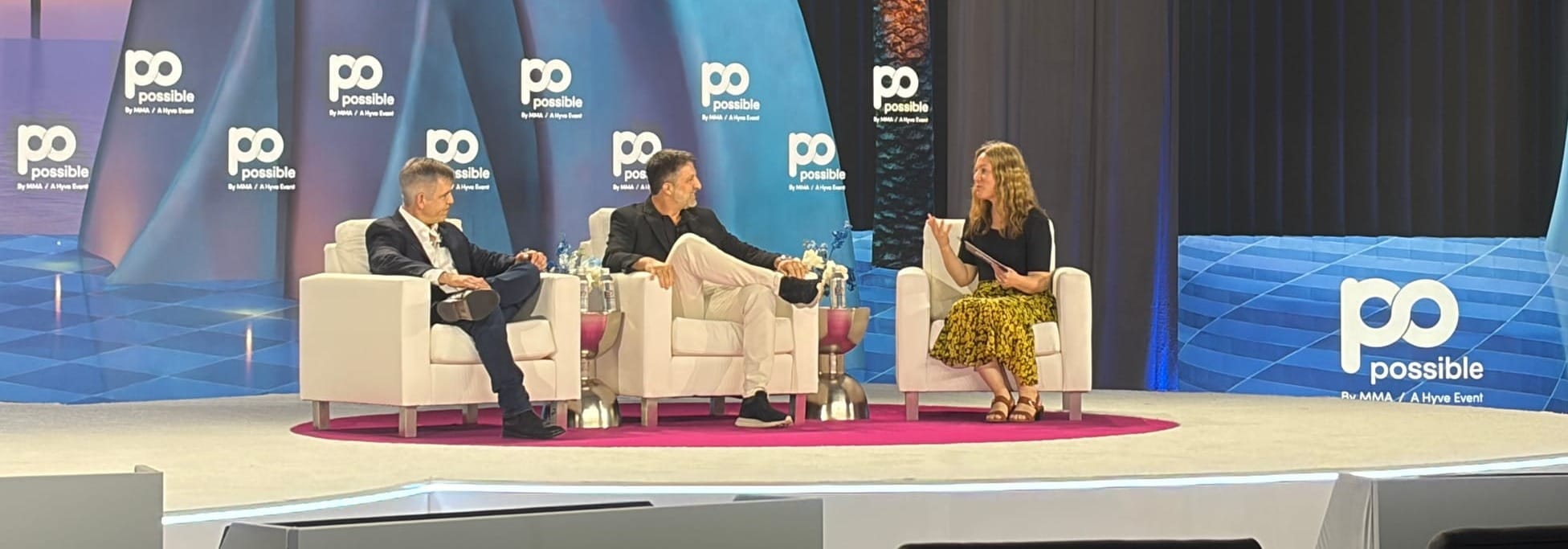
In a session moderated by Zoe Ruderman, they unpacked a Super Bowl campaign created with MrBeast that extended beyond the 30-second slot into a broader, participatory experience.
The campaign centred on a simple structure. A prize was locked behind a code, and people could attempt to solve it by following clues distributed across different pieces of content. The Super Bowl ad introduced the idea, but most of the activity happened afterwards.
The project was developed quickly, following an initial exchange between MrBeast and Marc Benioff. From there, both teams worked in parallel to build a campaign that extended beyond a single media moment.
The Ad as an Entry Point
A consistent point throughout the session was how the Super Bowl slot was used.
Rather than treating the 30-second spot as a complete campaign, it was positioned as the starting point. The ad directed people towards a wider environment that included a website, a series of videos, social content and an interactive layer built around Slack.
The intention was to give people a next step if they were interested, rather than expecting the ad itself to carry the full message.
This changes the role of high-reach media. It becomes a way to introduce something that can continue, rather than a standalone output.
Built Around MrBeast’s Format
The structure of the campaign closely followed how MrBeast typically builds content.
A clear challenge was established early. The audience was given a role within that challenge. Progress depended on paying attention to details across multiple formats.
That alignment mattered. The campaign did not require the audience to adopt a new behaviour. It used patterns they were already familiar with, such as following clues, rewatching content and sharing findings.
From a brand perspective, this reduced friction. The format carried the engagement, rather than the message alone.
Keeping the Product Inside the Logic
For Salesforce, the priority was to ensure that the product had a clear place within the experience.
Slack was not presented separately. It functioned as part of the mechanism, with a custom Slackbot acting as one of the interfaces people interacted with. In parallel, Salesforce produced behind-the-scenes content showing how MrBeast’s team uses Slack in its daily work.
These elements were connected to the wider campaign. In some cases, they contributed directly to the progression of the puzzle.
This approach avoided a split between storytelling and product communication. The product appeared within a real context, rather than alongside it.
Working With a Creator Without Over-Structuring
Both speakers described a working process that relied on clear roles.
MrBeast’s team led on how the experience should function from an audience perspective. Salesforce focused on how the product and infrastructure would support it.
Zissimos noted that the work needed to “make sense” in terms of the connection between the experience and the product. Beyond that, there was limited effort to control the creative direction in detail.
That balance is practical rather than philosophical. Too much structure would have slowed the process. Too little would have weakened the product connection.
Participation Over Time
The campaign was designed to accommodate different levels of involvement.
Some people encountered the campaign through the Super Bowl and did not go further. Others engaged with parts of the puzzle. A smaller group followed it more closely, working through multiple stages and, in some cases, collaborating with others.
This layered participation reflects how audiences behave across creator-led formats. Not all engagement is equal, and not all of it needs to be.
The campaign allowed for that variation rather than trying to standardise it.
Execution Constraints
A significant part of the discussion focused on execution.
The campaign required a dedicated environment that could handle large volumes of traffic while remaining separate from Salesforce’s existing customer systems. It also required coordination across multiple teams, including creative, engineering, product and legal.
The timeline limited how much could be built, which influenced decisions about the scope of the experience. Some initial ideas were set aside in favour of approaches that could be delivered reliably.
From the outside, the campaign appears straightforward. In practice, much of the work was in aligning systems and teams within a short timeframe.
Final Take
The session outlined a shift in how large media moments can be used.
The Super Bowl ad introduced the campaign, but most of the value came from what followed. The experience was structured so that people could choose to engage further, with the product integrated into that process.
For teams looking at similar approaches, the key points are relatively direct:
- Use reach to introduce, not conclude
- Build on formats the audience already understands
- Place the product within the experience, not alongside it
- Accept that participation will vary across the audience
The campaign does not suggest a single model to replicate. It shows how aligning format, creator behaviour and product use can extend a campaign beyond its initial moment.