
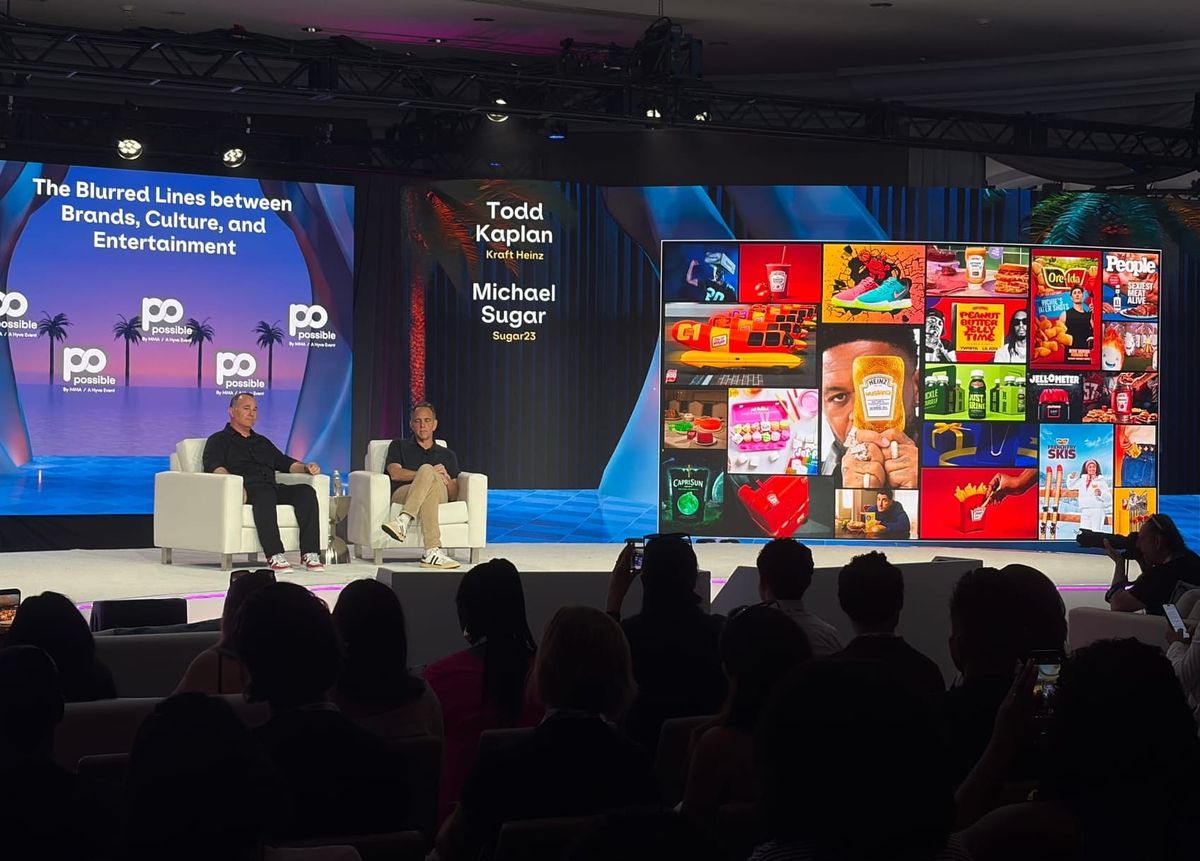
At POSSIBLE 2026, Todd Kaplan and Michael Sugar discussed how brands can play a more active role in culture.
Kaplan leads marketing across a portfolio of around 70 brands at Kraft Heinz. Sugar comes from the entertainment side, producing films and series, and now works with brands looking to operate more like studios.
The discussion focused on how this approach works in practice, using existing brand assets and real marketing constraints.
From Reach to Relevance
Kaplan started with a simple observation. Reach is no longer the problem.
Most of Kraft Heinz’s brands already have high awareness. The challenge is relevance.
Traditional advertising still plays a role, but it is less effective at creating the kind of engagement brands are now looking for. As he put it, consumers are increasingly skipping, ignoring or multitasking through ads. Being seen is not enough.
The shift is towards creating things people want to talk about, share, or experience. That often sits in earned media rather than paid media.
The implication is practical. Instead of starting with media plans, teams start with ideas that can travel.
Using Brand Equity as a Starting Point
A recurring theme in Kaplan’s approach is what he called “latent equity”.
Many of Kraft Heinz’s brands have been around for decades. They already carry recognisable elements, whether visual, behavioural or cultural.
The work is to identify those elements and build from them.
He gave several examples:
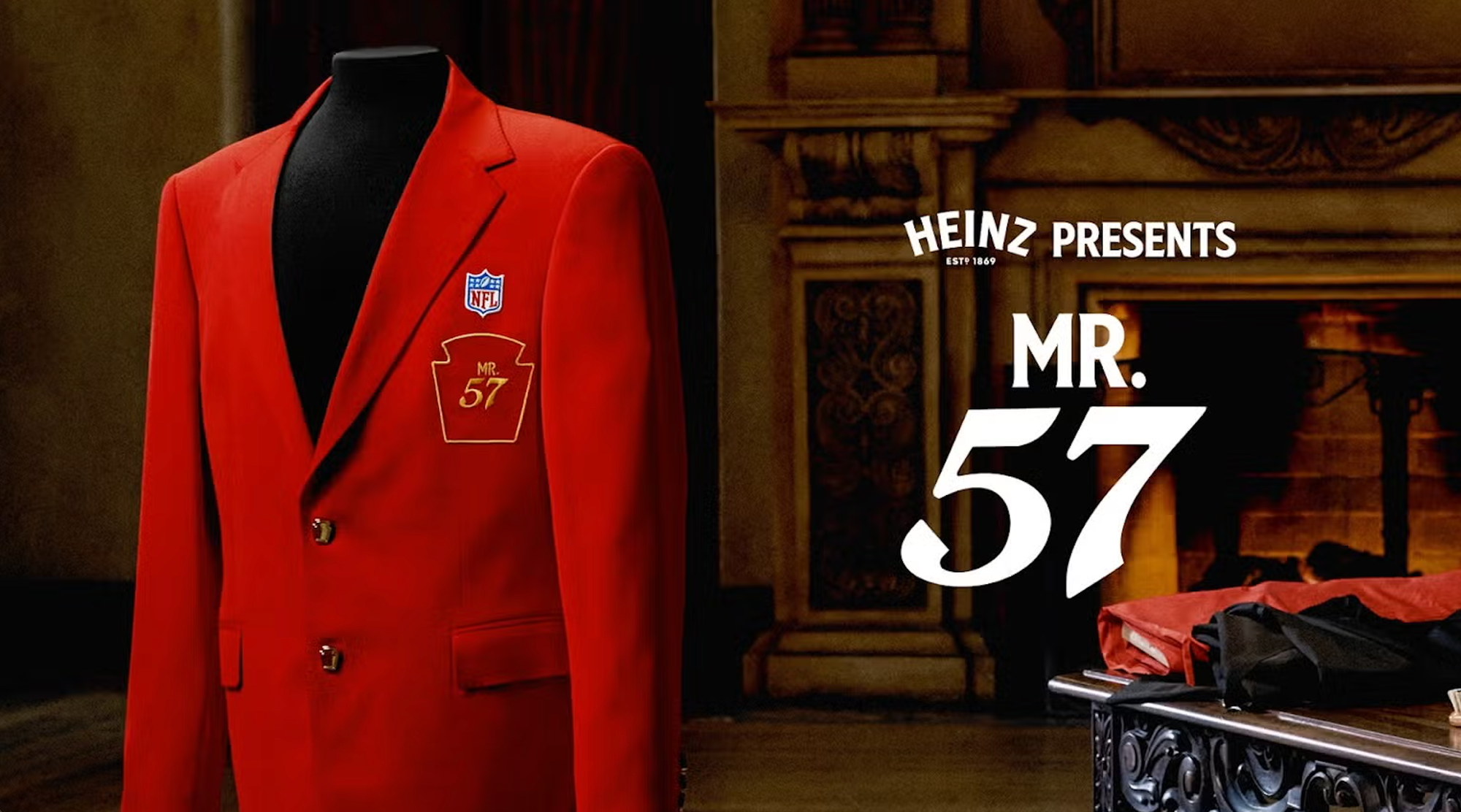


None of these required inventing a new brand identity. They extended something that already existed.
That’s the underlying model. Start from what the brand is known for, then connect it to something people already care about.
Creating IP, Not Just Campaigns
The clearest example of this approach was Oscar Mayer.
The brand has long had the Wienermobile, a piece of physical brand equity that has existed for decades. Instead of treating it as a promotional tool, Kaplan’s team turned it into a piece of entertainment.
They created the “Wienie 500”, a race between Wienermobiles held during a key sales period. It was produced as a live event, distributed through media partners, and designed to generate attention beyond paid placements.
The important point is not the format itself. It’s how the brand asset was used.
Rather than placing the brand inside existing content, they built something around it.
Kaplan described this as creating IP, not just campaigns.
Brands as Part of Entertainment
Sugar’s perspective built on that.
From his side, the opportunity is for brands to move beyond short-form campaigns and contribute to longer-form entertainment.
His argument was not that brands should insert themselves into films or shows in obvious ways. Audiences tend to reject that.
Instead, brands can fund or enable entertainment where their presence is clear but not intrusive. If the content works, the association follows.
He used the example of how brands might support a series or film in a way that gives them attribution without forcing integration into the narrative.
This shifts the role of the brand. It becomes a producer or enabler, rather than a visible advertiser.
The Influence of the Creator Model
Both speakers pointed to the creator economy as a reference point.
Creators operate as integrated systems. They produce, distribute, and perform within the same structure. Their audience follows because the content is consistent and recognisable.
Brands often struggle with this because their work is fragmented across teams, agencies and platforms.
Kaplan’s view is that brands need to simplify that structure. Not necessarily by copying creators directly, but by aligning around clearer identities and more consistent outputs.
That includes investing in owned channels and building environments where audiences choose to engage, rather than being interrupted.
The Constraint: Execution
While the ideas are relatively straightforward, execution remains difficult.
Kaplan highlighted a practical challenge. Brands are still often treated as advertisers by media and production partners. That limits access to deeper forms of collaboration.
At the same time, internally, teams need to balance short-term performance with longer-term brand building. Many decisions are still driven by quarterly results.
That tension affects how far brands can go in building entertainment-led initiatives.
A Portfolio Approach
One way Kaplan manages this is by treating marketing as a portfolio.
Some work is short-term and performance-driven. Some builds brand equity over time. Some experiments with new formats.
The aim is not to replace one with the other, but to balance them.
This is particularly relevant when managing a large number of brands at different stages of development. Not every brand can operate in the same way or at the same level of investment.
Final Take
The session did not suggest that all brands should become entertainment studios.
What it did show is how some brands are expanding their role.
- Moving from awareness to relevance
- Using existing brand equity as a starting point
- Building IP rather than one-off campaigns
- Creating things that people choose to engage with
The shift is gradual. Advertising still exists. Media buying still matters.
But more of the work is moving towards creating something that can stand on its own, without relying on interruption to be seen.