
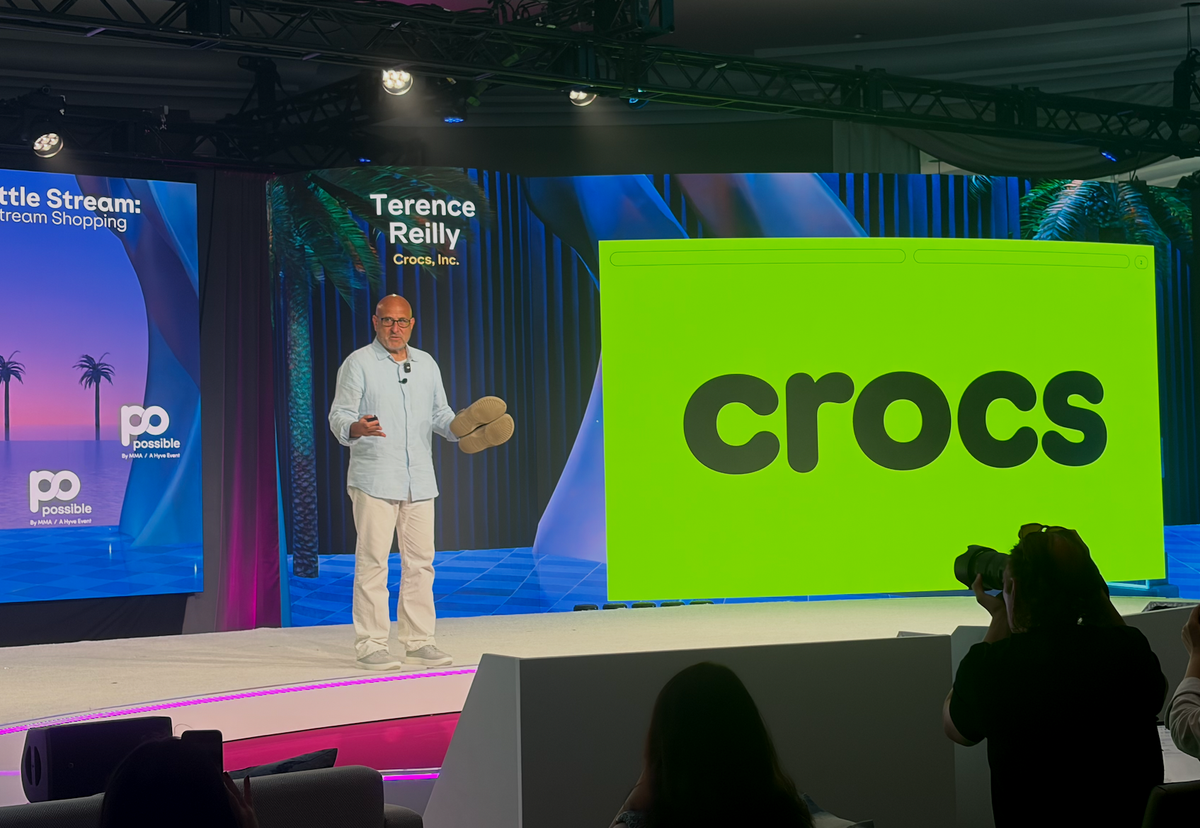
At POSSIBLE 2026, Terence Reilly (Chief Brand Officer at Crocs) shared how the brand is approaching live commerce, with a focus on consistency rather than one-off moments.
Reilly has been closely involved in the brand’s evolution over the past decade, including its shift from being widely mocked online to becoming a recognisable presence in fashion and culture. That context shaped much of the session.
The focus was not on why live commerce matters, but how Crocs is using it as part of its day-to-day marketing.
From Meme to Momentum
Reilly started with a simple point. Crocs never lacked awareness. At one stage, it was widely ridiculed online, which in his view still meant the brand was culturally visible.
The work since then has been about redirecting that attention. Collaborations, product drops and cultural moments have gradually repositioned the brand, but the underlying strategy has stayed consistent: lean into what people already recognise.
That same logic now applies to live commerce.
Live Streaming as a Habit, Not a Campaign
A key part of Crocs’ approach is frequency.
Rather than treating live shopping as a series of isolated events, the brand has built a regular presence on platforms like TikTok. Reilly described it as an always-on model, where audiences know they can engage with the brand at any time.
One example was “Croctober”, where the team live streamed continuously throughout the month. The objective was not just sales, but visibility and repeat engagement.
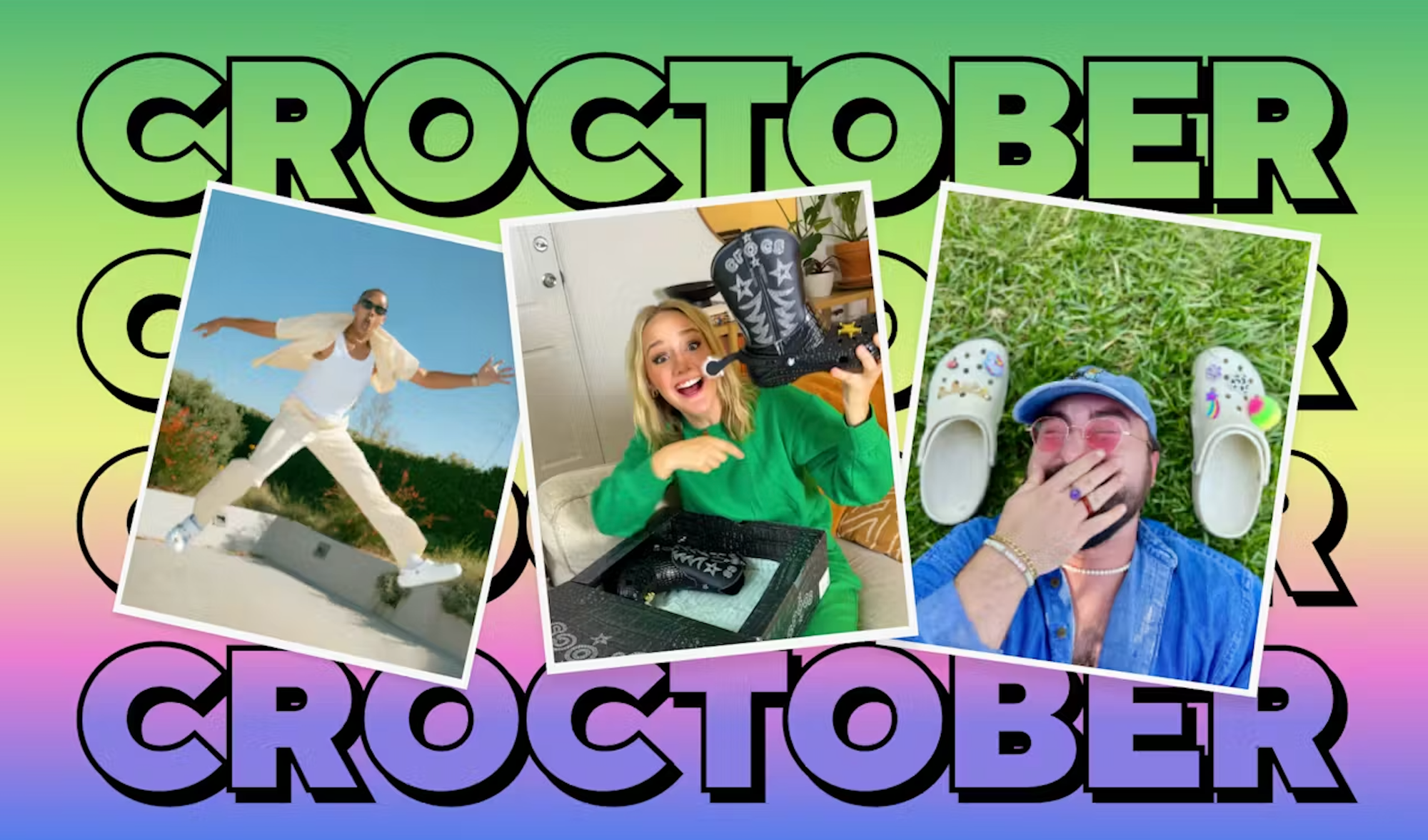
The idea is simple: familiarity builds over time.
Speed Over Structure
Reilly emphasised the importance of moving quickly.
Instead of building large internal processes around live commerce, Crocs operates with small teams that can test ideas and iterate. The approach is closer to social content production than traditional campaign planning.
Mistakes are expected, but the priority is to identify what works and expand it.
This is consistent with how the brand has approached other channels in the past.
The Role of the Host
One of the more practical points in the session was the importance of the host.
Live commerce depends on people who can present products, respond to comments and keep the session engaging in real time. This is closer to entertainment than retail.
During the session, Reilly demonstrated this directly by running a live stream on stage, showing how hosts interact with viewers, highlight products and respond to questions.
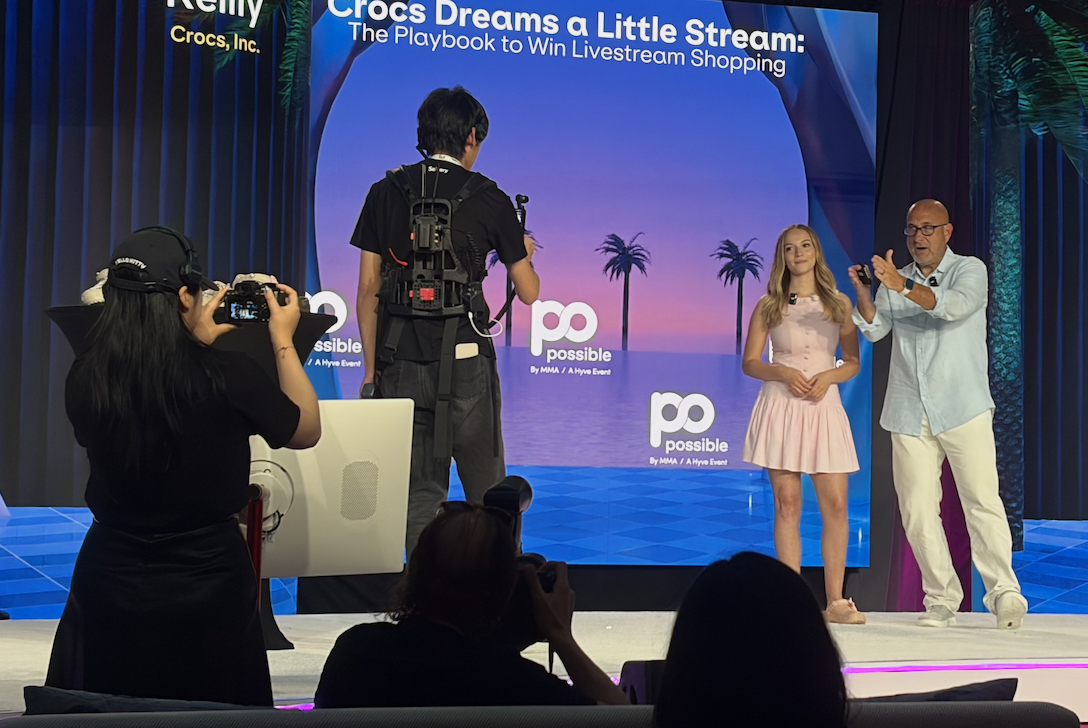
The format relies on interaction, not just exposure.
Linking Content and Commerce
Crocs uses live streaming to connect different parts of its marketing.
Content, product drops and retail activity are tied together through these sessions. For example, live streams can:
- Introduce new products early
- Offer limited promotions during the stream
- Bring attention to physical stores or events
Reilly also showed how live content can extend into other formats, such as in-store displays or collaborations with creators.
The goal is to create continuity across channels.
Bringing in Culture
The session included a live appearance from Kyle Cooke, linking the stream to a wider entertainment context.
This reflected a broader point: live commerce works best when it connects to something beyond the product itself, whether that is a personality, a moment or a community.
For Crocs, collaborations and cultural references are already part of the brand. Live streaming becomes another way to activate them.
What Makes It Work
Across the examples, a few consistent elements emerged:
- A product that is easy to demonstrate and personalise
- A format that allows for continuous interaction
- A team structure that supports fast execution
- A link between content and commercial outcomes
None of these are unique on their own. The difference is how they are combined and repeated over time.
Final Take
Crocs’ approach to live commerce is relatively straightforward.
It treats live streaming as an ongoing channel rather than a campaign tool. It prioritises speed and interaction over polish. And it builds on existing brand strengths rather than creating entirely new formats.
The result is a model that is less about single moments and more about sustained presence.
Live commerce, in this case, is not a separate strategy. It is an extension of how the brand already operates.